
Interior vs Exterior 3D Rendering: When to Use Each

When property developers and architects decide to invest in 3D visualization, the conversation quickly moves past whether to do it and into something more practical: which type of rendering will actually deliver the outcome you need?
Whether the goal is securing investment, moving through design approvals faster, or pre-selling units before construction begins, getting the right mix of interior vs exterior 3D rendering is what determines how much work those visuals actually do for your project. Understanding the strategic differences between these types of architectural rendering means your marketing budget goes where it has the most impact — rather than being spread too thin or misaligned with your current project stage.
At Archi3DViz, we've spent over seven years helping developers across the US, UK, and Australia work through exactly these decisions — and the results consistently show up in fewer revision cycles and stronger project momentum.
What is the Difference Between Interior and Exterior 3D Rendering?
At its core, the difference comes down to scale, lighting logic, and what you're trying to make someone feel.
3D exterior rendering takes the broader view. It's about showing how a building sits within its environment — the architecture, the site context, the overall presence of the structure from the street or the sky. 3D interior rendering works at a much more human scale, focusing on the details that make a space feel real and livable: materials, lighting mood, furniture layout, and spatial flow.
Put simply, exteriors answer the question "does this project belong here?" Interiors answer the question "could I actually live or work here?" Both matter — they just do different jobs at different points in the buyer or approvals journey.

3D Interior Rendering: Selling the Lifestyle
For residential developers and interior designers, 3D interior rendering is often the most direct path to an off-plan sale. By simulating how natural and artificial light interact with different textures and finishes, interior renders give buyers something they can genuinely imagine themselves inside — which is exactly the emotional connection that moves them from interest to commitment.
Key Deliverables and Use Cases
Residential Projects: High-impact visuals of kitchens, master suites, and living areas that let buyers picture their daily life in the space before it exists.
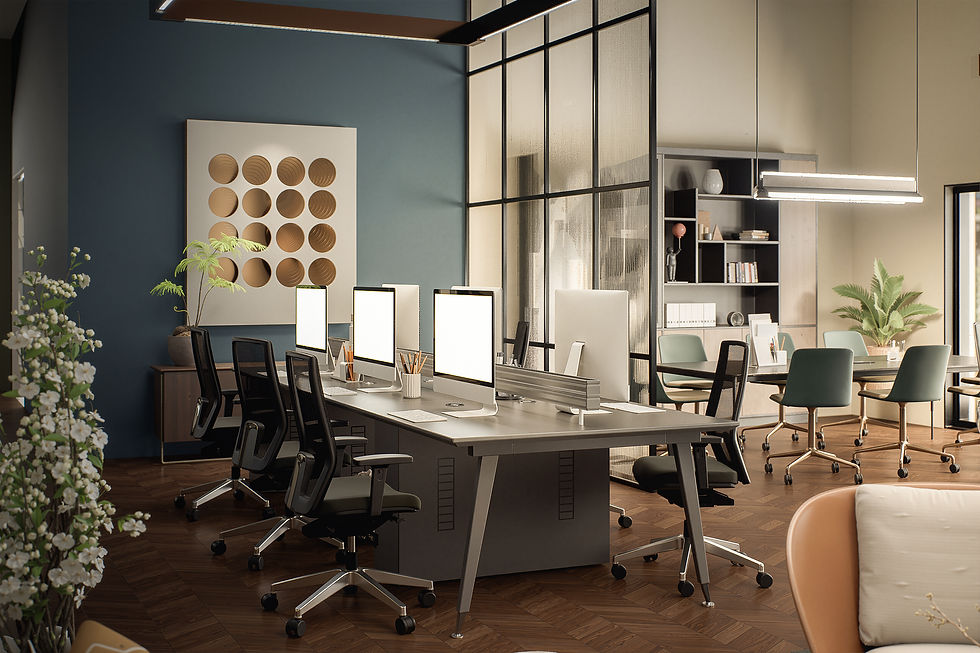
Commercial Spaces: For office or retail developments, interior renders demonstrate how functional layouts and brand identity come together in practice.
Industrial Projects: Factory floor plans and machinery placement can be visualized clearly, giving operators confidence in the workflow before a single beam is installed.
Business Outcome: Bringing interior visualization into the early stages of a project has been shown to reduce revision cycles by up to 30%. When the design team and the client are looking at the same clear picture from the start, costly misalignments rarely make it to the construction phase.
Explore our Residential Visualization Services to see how we bring master bedrooms and kitchens to life.
3D Exterior Rendering: Selling the Vision and Context
If interior rendering sells the lifestyle, exterior rendering sells the landmark. It's the format that carries the most weight in planning applications and pre-launch marketing campaigns — and the one that tends to shape how a project is perceived before most people ever see the inside.
Primary Focus Areas
Architectural Detail: Showcasing the facade, cladding choices, and the structural features that make the building visually distinctive.
Site Context: Placing the building within its actual neighborhood using aerial perspectives — particularly valuable for subdivision and large-scale site development projects.
Time-of-Day Variation: Showing how the building reads at golden hour versus dusk versus a bright midday adds dimension to marketing materials and helps councils and investors visualize the full picture.
Business Outcome: Strong exterior renders consistently support faster design approvals from local councils. They also give institutional investors the visual evidence they need to feel confident about project expenses — which tends to make those funding conversations considerably smoother.

Architectural Render Types: A Comparative Breakdown
To help you scope your next project clearly, here's a practical look at how the two main architectural render types compare across the decisions that matter most.
Feature | 3D Interior Rendering | 3D Exterior Rendering |
Primary Goal | Emotional connection and buyer experience | Curb appeal and planning / council approval |
Focus Points | Furniture, textures, and soft lighting | Landscape, facade, and environment |
Technical Approach | Ray-tracing for material accuracy | Atmosphere and global illumination |
Common Assets | 3D floor plans and flythroughs | Aerial views and streetscapes |
People Also Ask
What is the difference between interior and exterior 3D rendering?
The core difference lies in perspective and purpose. Exterior 3D rendering focuses on how a building looks and sits within its surroundings — making it the go-to format for planning applications, investor presentations, and pre-launch marketing. Interior 3D rendering zooms in on the human experience of the space, capturing materials, lighting, and layout in a way that helps buyers picture themselves living or working there. Both are valuable — the right choice depends on what stage your project is at and who you're trying to reach.
Which type of rendering is more expensive?
Exterior renders can be more resource-intensive because of the detail required for landscaping elements like foliage, vehicles, and environmental lighting. That said, highly detailed interior renders involving custom furniture modeling can reach similar price points. The best way to get an accurate sense of cost is to scope the project based on your specific deliverables rather than the format alone.
Can I use the same 3D model for both?
Yes, and this is one of the real efficiencies of working with a studio that has a structured workflow. At Archi3DViz, our SketchUp-based process builds a single comprehensive model from which both interior and exterior perspectives can be extracted — keeping everything consistent across your full marketing suite without doubling the work.
How long does a typical render take?
Most standard residential or commercial projects come in within five to ten business days, though complexity will influence that timeline. Turnaround speed is something we prioritize because we understand that development schedules don't leave much room for waiting.
Strategic Implementation: Which Do You Need?
Not sure where to start? Here's a straightforward way to think about it:
Interior rendering makes sense if you're targeting end-users directly, selling off-plan apartments, or walking a homeowner through a renovation concept that doesn't exist yet.
Exterior rendering makes sense if you're seeking investor funding, preparing a council submission, or launching the marketing campaign for a new subdivision or commercial development.
Both make sense if you want a full-funnel marketing strategy — one that earns attention from the street and then holds it once someone steps inside.
For the most immersive experience, Archi3DViz also offers 360° Interactive Renders, which let stakeholders move fluidly between interior and exterior views within a single virtual tour.
Secure Your Project ROI with Archi3DViz
A lack of visual clarity is one of the most common things that stalls project momentum — and it's one of the most avoidable. Whether you need a single hero exterior shot or a complete suite of interior flythroughs, we bring a results-focused approach to every project we take on.
Ready to visualize your next development?
Interested in a more immersive experience? View our 360 Interactive Tours for a complete look at what modern property marketing can look like.


Comments